Hallowed Ground: Cultural Placemaking at the Bruce Springsteen Center for American Music
When recounting the structure of his iconic songs, Bruce Springsteen describes an approach that blends genres. “The verses are the blues, and the chorus is gospel,” Springsteen says in the short film, The Ties That Bind: Bruce Springsteen’s American Music Journey, which plays at the COOKFOX Architects-designed Bruce Springsteen Center for American Music, in Long Branch, New Jersey.
True gospel needs a house of worship to be heard. For fans of the Boss, the Springsteen Center, which opens on June 13th, is just that: the closest thing to church short of a Bruce concert. The center tells the story of Springsteen’s career and his outsized role in American music, especially rock and roll. Located at Monmouth University, it also houses the official Springsteen archives and a rotating selection of exhibits about American music.
“This place is hallowed ground,” said Robert Santelli, the center’s Executive Director, addressing a group of diehard fans known as “Spring-Nuts.” They were there for a screening of the film, which was commissioned for the center and directed by Springsteen’s longtime collaborator Thom Zimny.
Santelli wasn’t speaking figuratively: the location is symbolic. The house where Springsteen wrote Born to Run is only four blocks away; the Asbury Park boardwalk and the Stone Pony—where Springsteen and the E-Street band became local legends before being launched to global fame—is a ten minute drive. One of Springsteen’s primary residences is just a few towns over.
Following the screening, the Spring-Nuts filed out of the auditorium to tour the exhibits, which were curated by the center and designed by C&G. A permanent display presents the many genres that comprise American music—from country and blues, to jazz and rock and roll—highlighting how the different forms influenced each other. Display cases house artifacts like Michael Jackson’s sequined glove, Louis Armstrong’s trumpet, and a letter Buddy Holly wrote to his mother after a four-night stint at the Howard Theatre, in Washington D.C. “The first two weren’t so good but the third was fair and the last one (tonite) [sic] was really good,” the singer noted. Even the greats needed to practice.
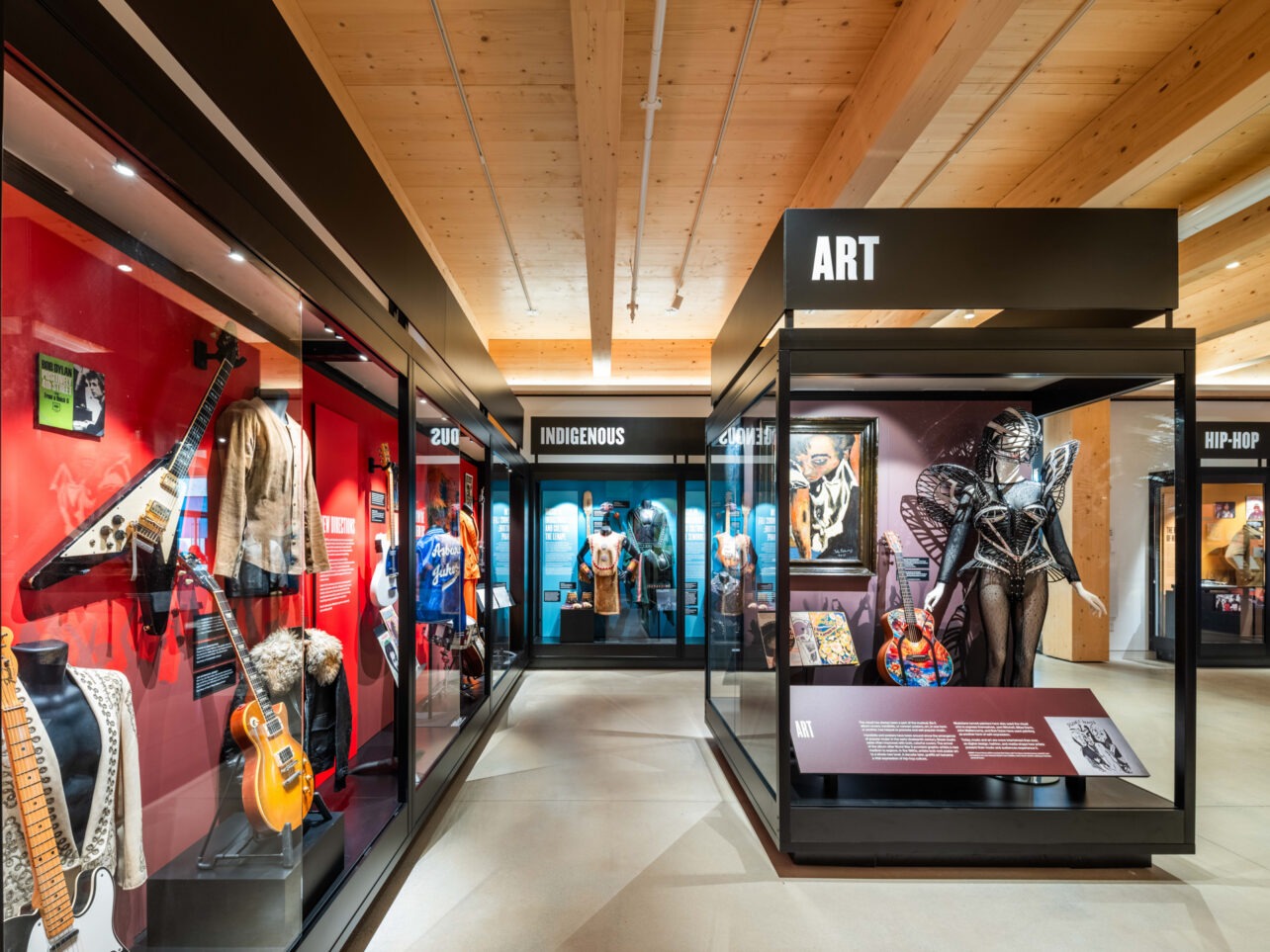
An opening show, titled Chimes of Freedom: Protest, Patriotism & the Power of Song, traces the history of protest in American music, beginning with Revolutionary War-era classics like “Yankee Doodle” and ending with current anti-establishment anthems like Kendrick Lamar’s “Alright.” The programming is timely. Springsteen recently concluded a concert tour inspired by his single “Streets of Minneapolis,” which he wrote in response to the anti-ICE protests earlier this year, and the deadly government crackdown that followed.
The exhibits devoted to Springsteen and the E-Street Band are located on the second floor. Video installations feature interviews with Springsteen and band members, replete with anecdotes of life on the road and insights into Springsteen’s songwriting process and literary influences. Guitars, leather jackets, and baseball caps belonging to Bruce—worn for album cover photoshoots and during concerts—will be of particular interest to the aficionados. Afterall, what’s a pilgrimage without a few relics?
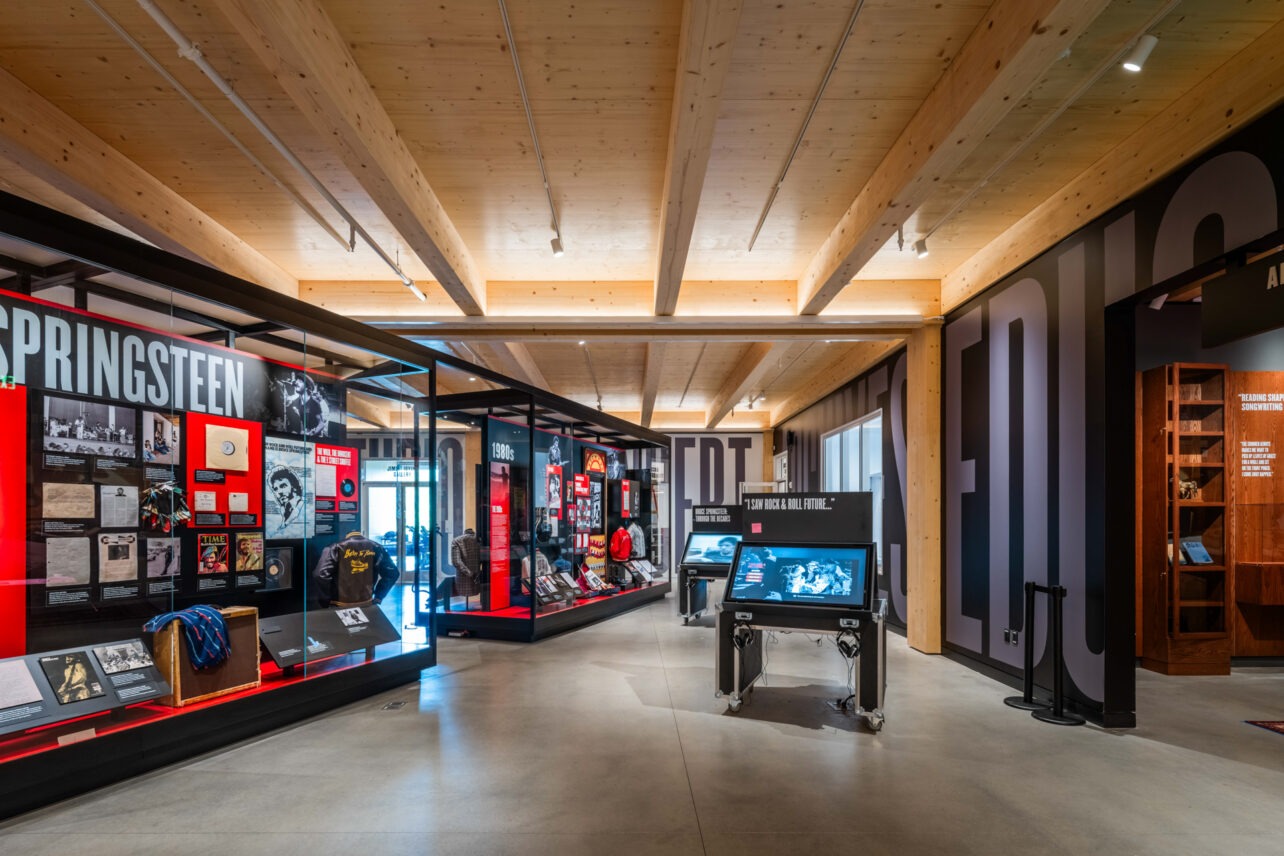
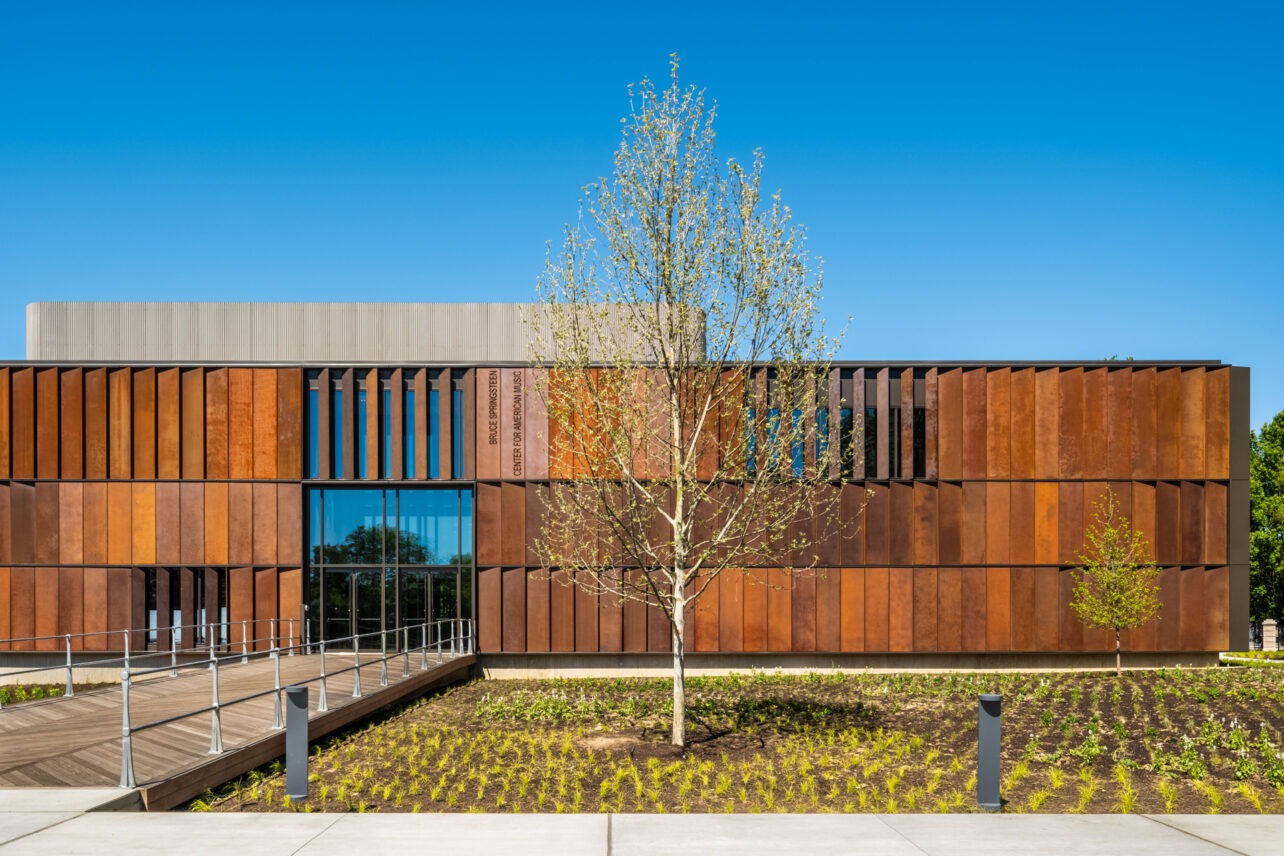
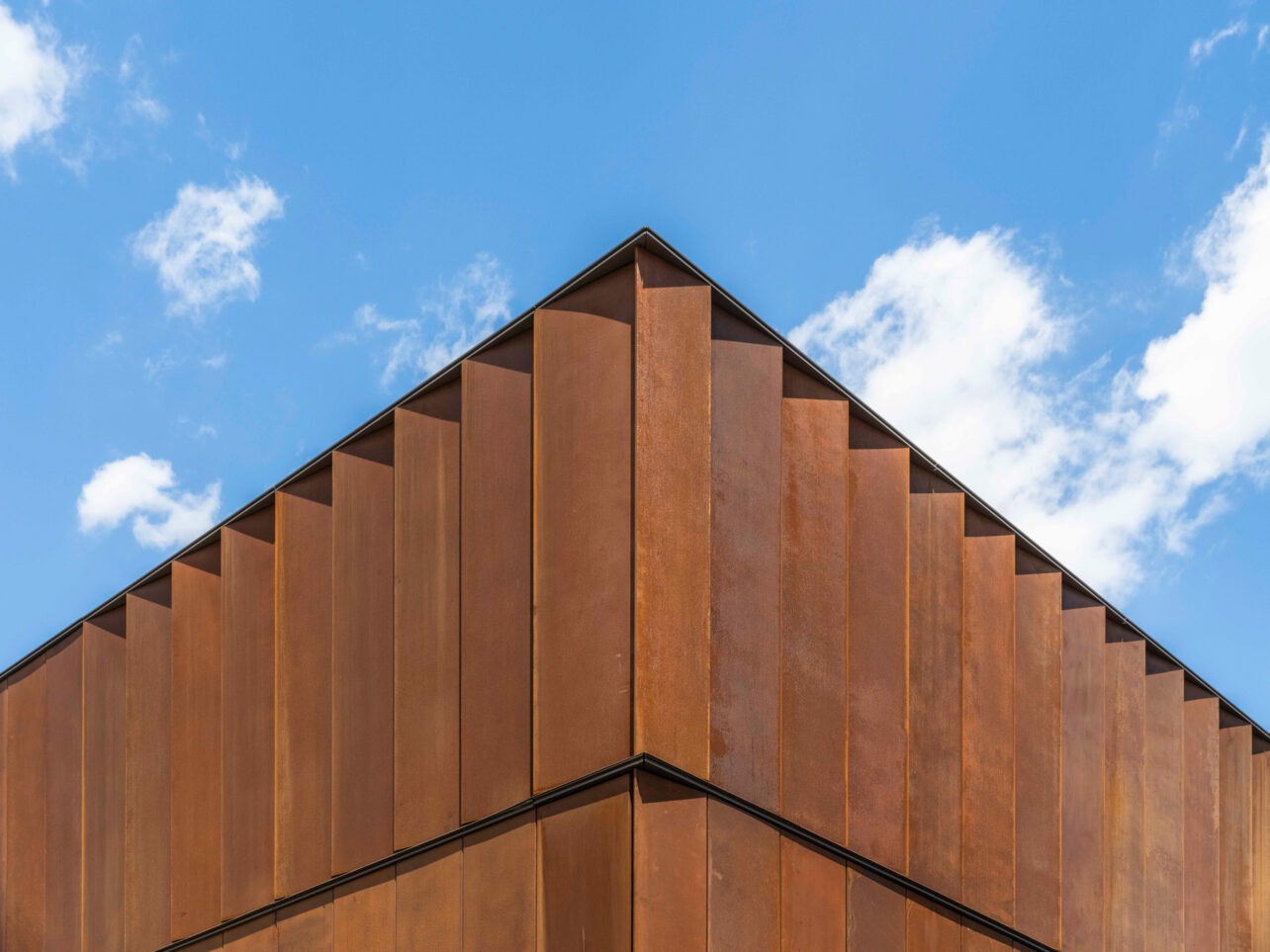
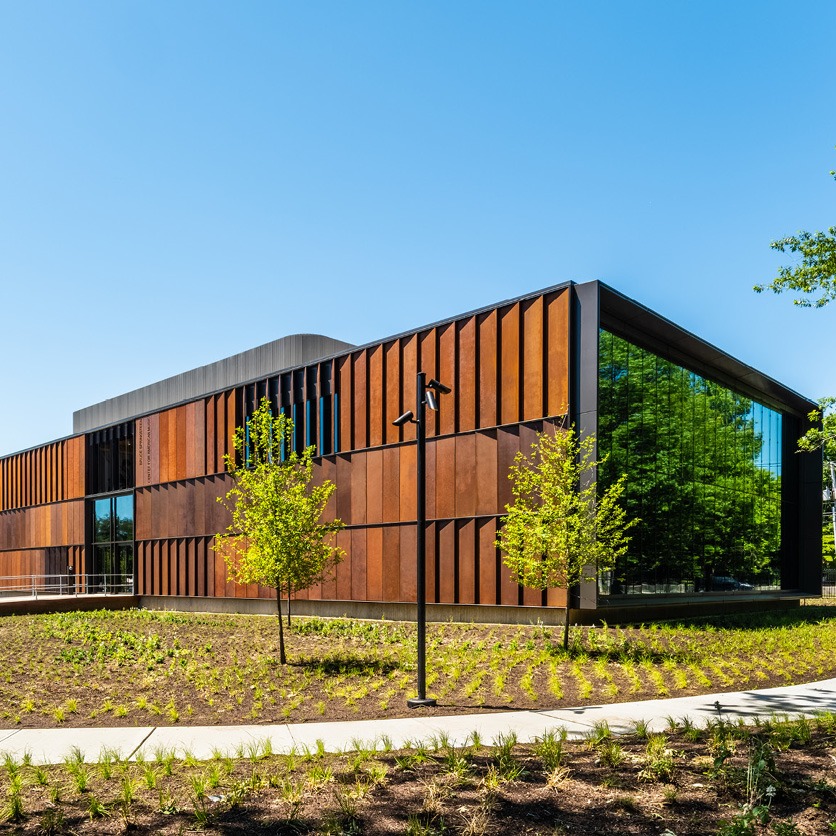
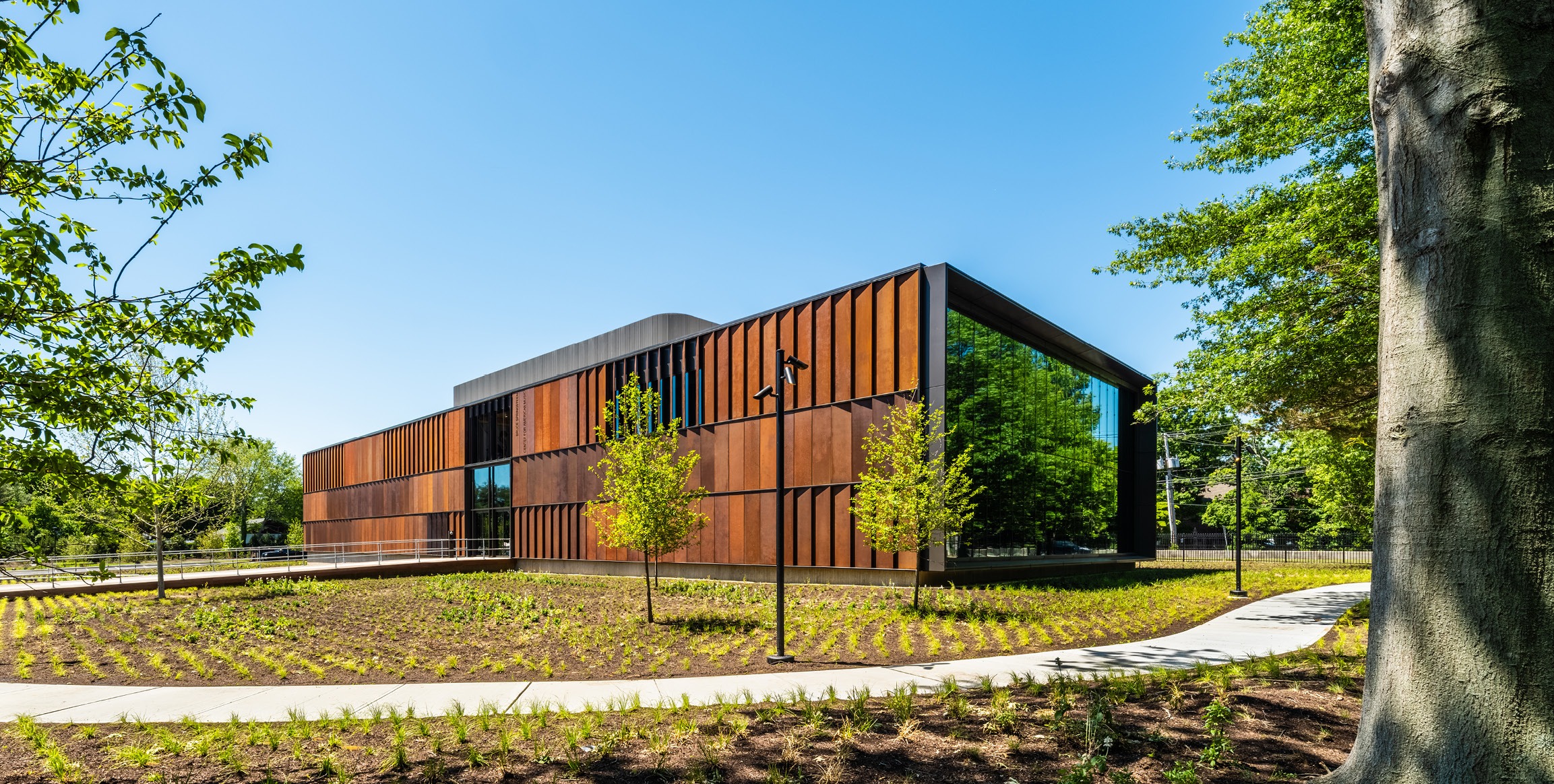
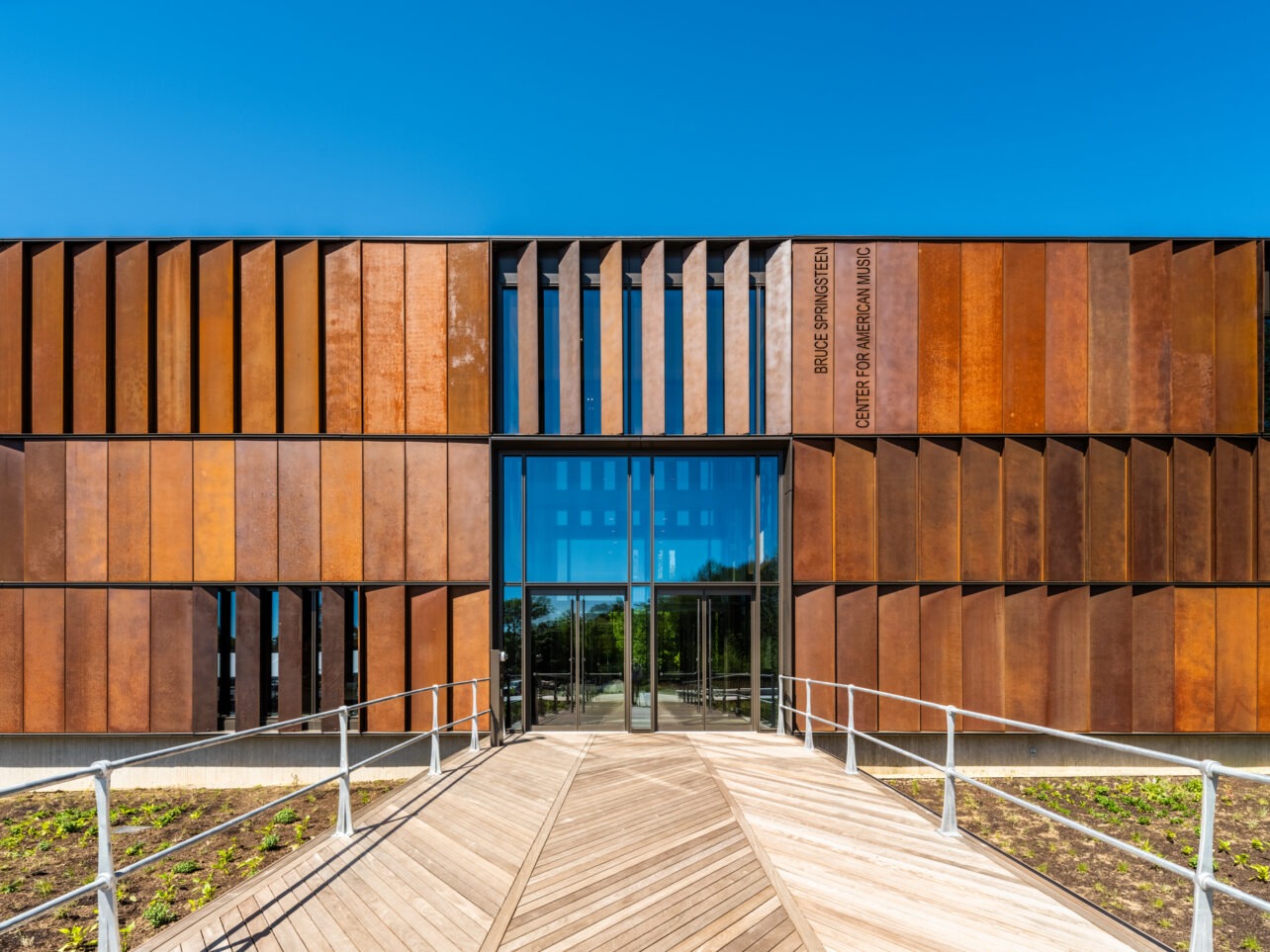
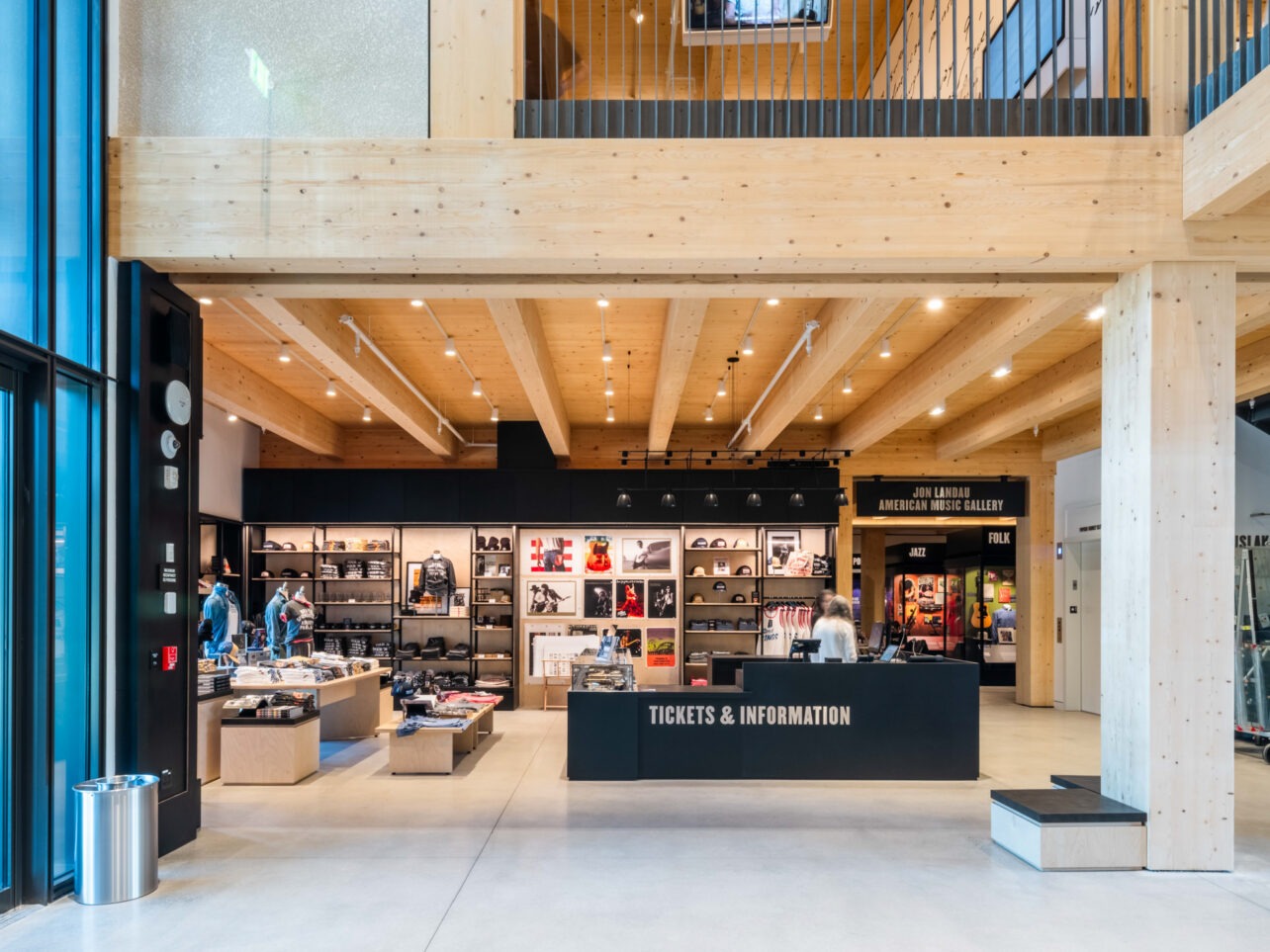
Despite the religiosity some visitors may project on the center, its design doesn’t evoke St. Peter’s Basilica as much as the industrial infrastructure that characterizes much of North Jersey. The building’s weathering steel facade looks striking against the budding, meadow-like landscape by LaGuardia Design Group. A wooden promenade that leads to the entrance immediately recalls the nearby Asbury Park boardwalk, the building’s most obvious connection to its cultural surroundings. Once inside, an expansive double-height lobby orients visitors to a view of an outside lawn. The exposed mass timber frame, another industrial reference, creates the impression of a sun-soaked warehouse, one that might educate you about heavy metal instead of heavy machinery.
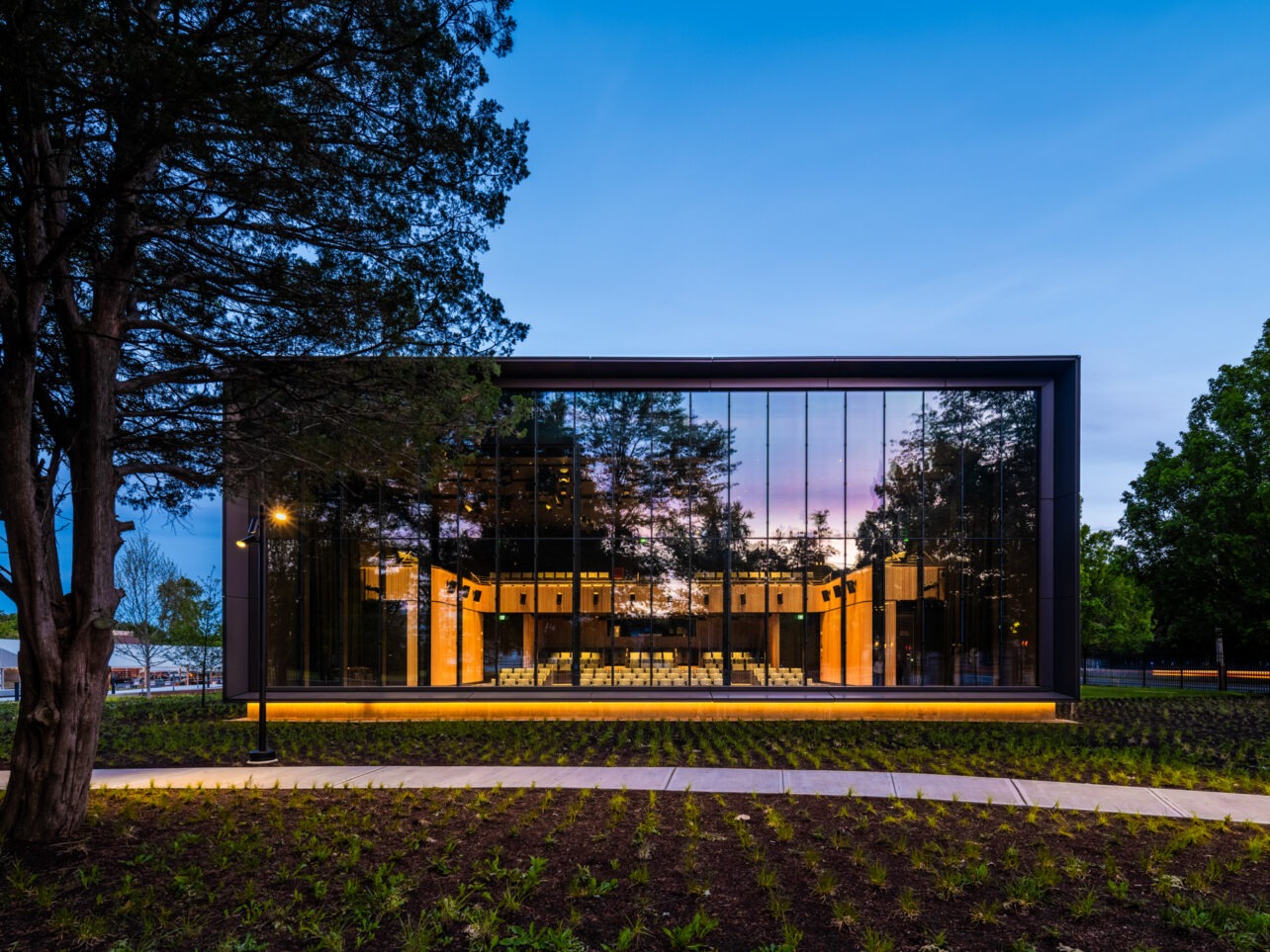
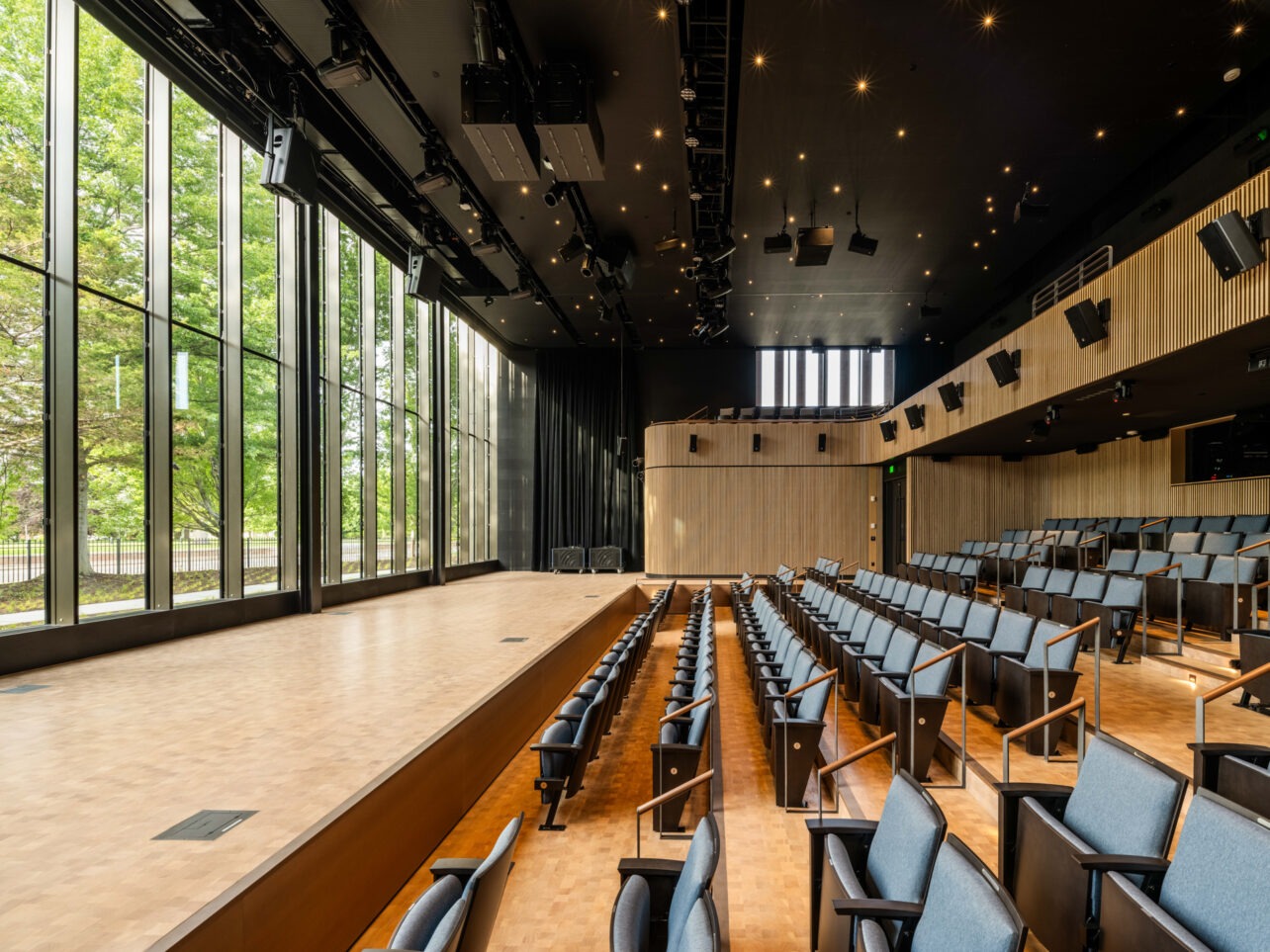
When the film isn’t playing, the auditorium curtain is drawn back to reveal a showstopper: a massive glass wall looking out to the Guggenheim Memorial Library. The Carrère and Hastings beaux-arts mansion, once a Gilded Age-era summer home for the Guggenheim family, is now owned and operated by Monmouth University. The sweeping view creates a dynamic juxtaposition, putting two of the university’s most architecturally significant buildings in conversation with each other.
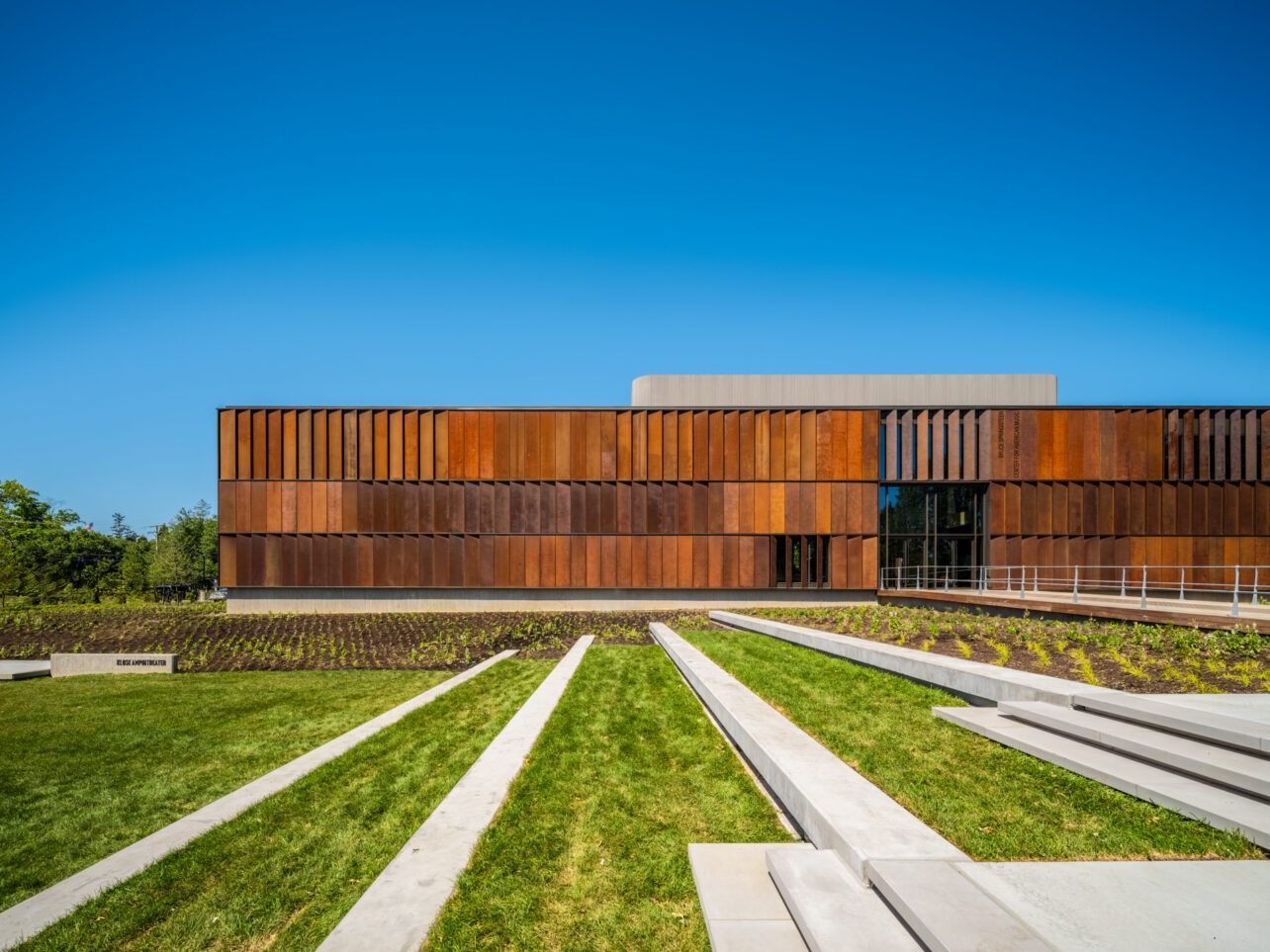
“We wanted the building to be an anchor to the campus,” said Rick Cook, COOKFOX’s design director and founding partner. An unmistakable departure from Monmouth’s prevailing campus style, the building achieves that goal, but in a way that feels sensitive to its surroundings. Part of that sensitivity is owed to the center’s relatively humble intentions. “At the end of the day, it was important to Bruce that the building was about American music, and that he was a chapter in it,” said Cook.
That chapter is incredibly popular. Visitors will be drawn to the center because of the music, to pick up the Book of Bruce and study its words. But they might find the architecture gives them reason to linger. Just like Springsteen’s narrative-driven songs, with their vivid characters and portraits of everyday America, this building has stories to tell.
The fans, no doubt, are eager to listen. The center says it anticipates 40,000 annual visitors in its first year, but given the dedication of Springsteen’s fanbase, one suspects the number will be higher. Once the building opens, Spring-Nuts and other devotees from around the world will descend upon Long Branch in droves. Those in the know won’t be walking: they were born to run.
Photos by Alex Ferrec
Words by Maximilian Tapogna