Bruce Springsteen Center for American Music
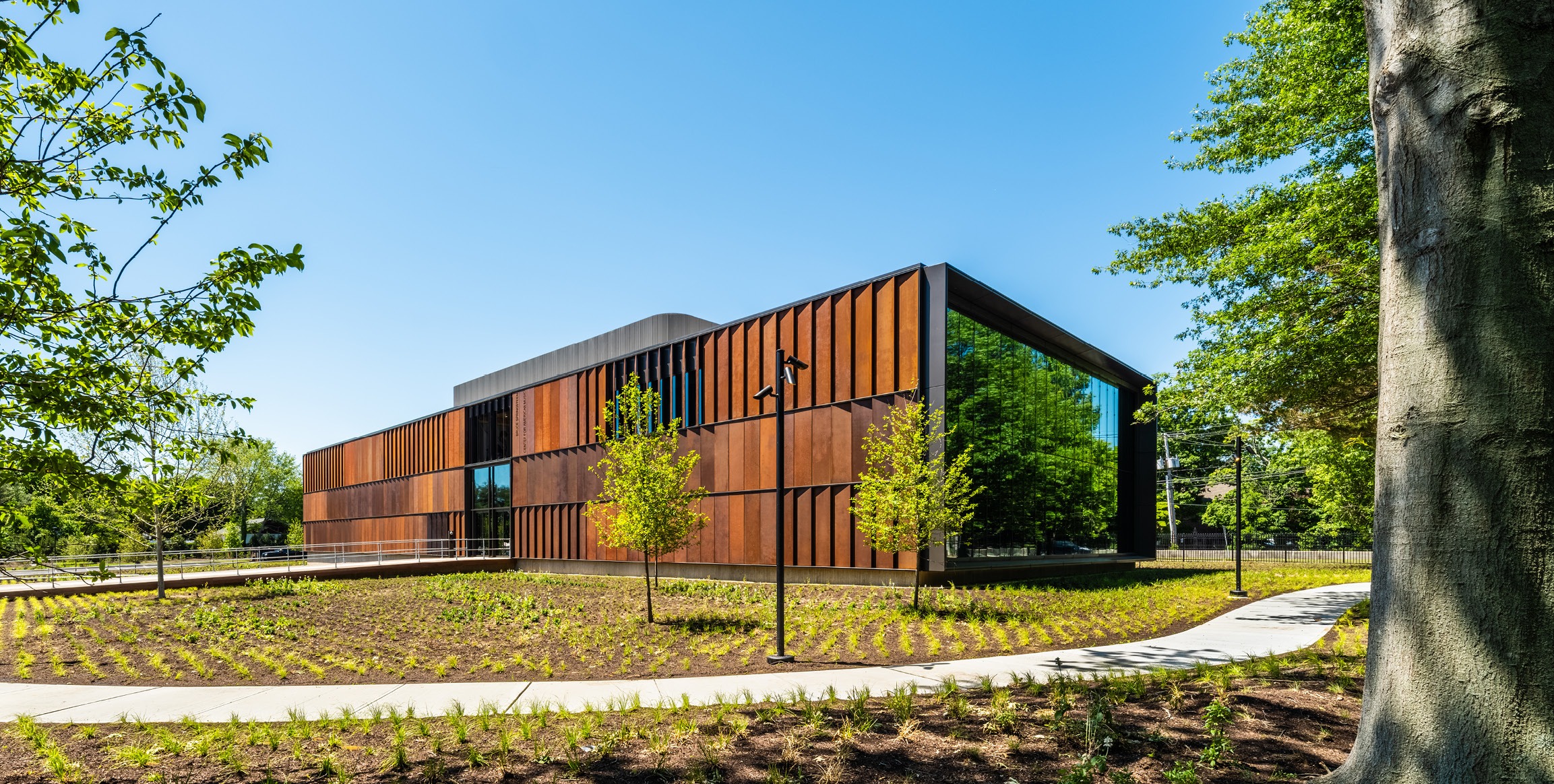
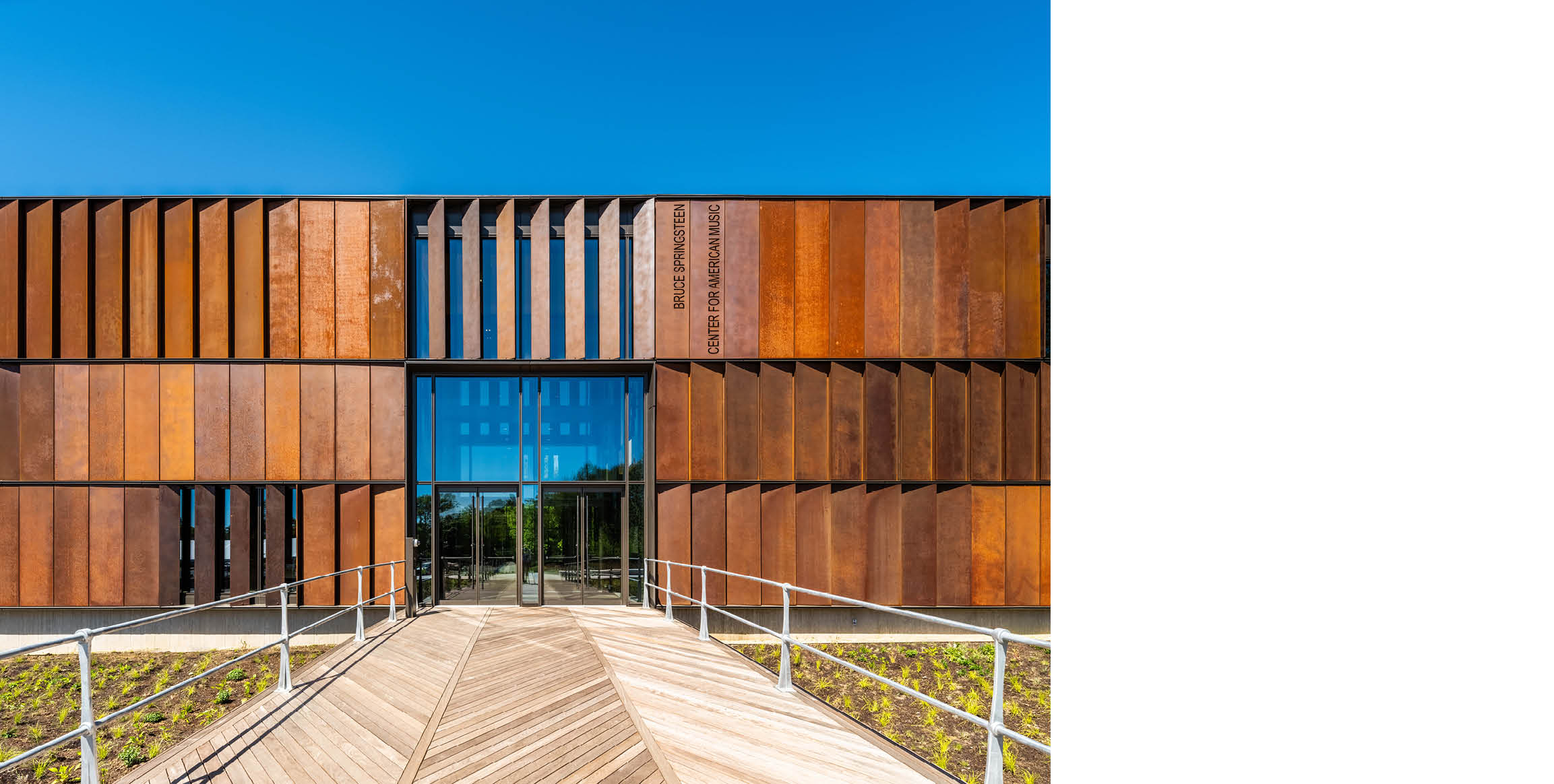
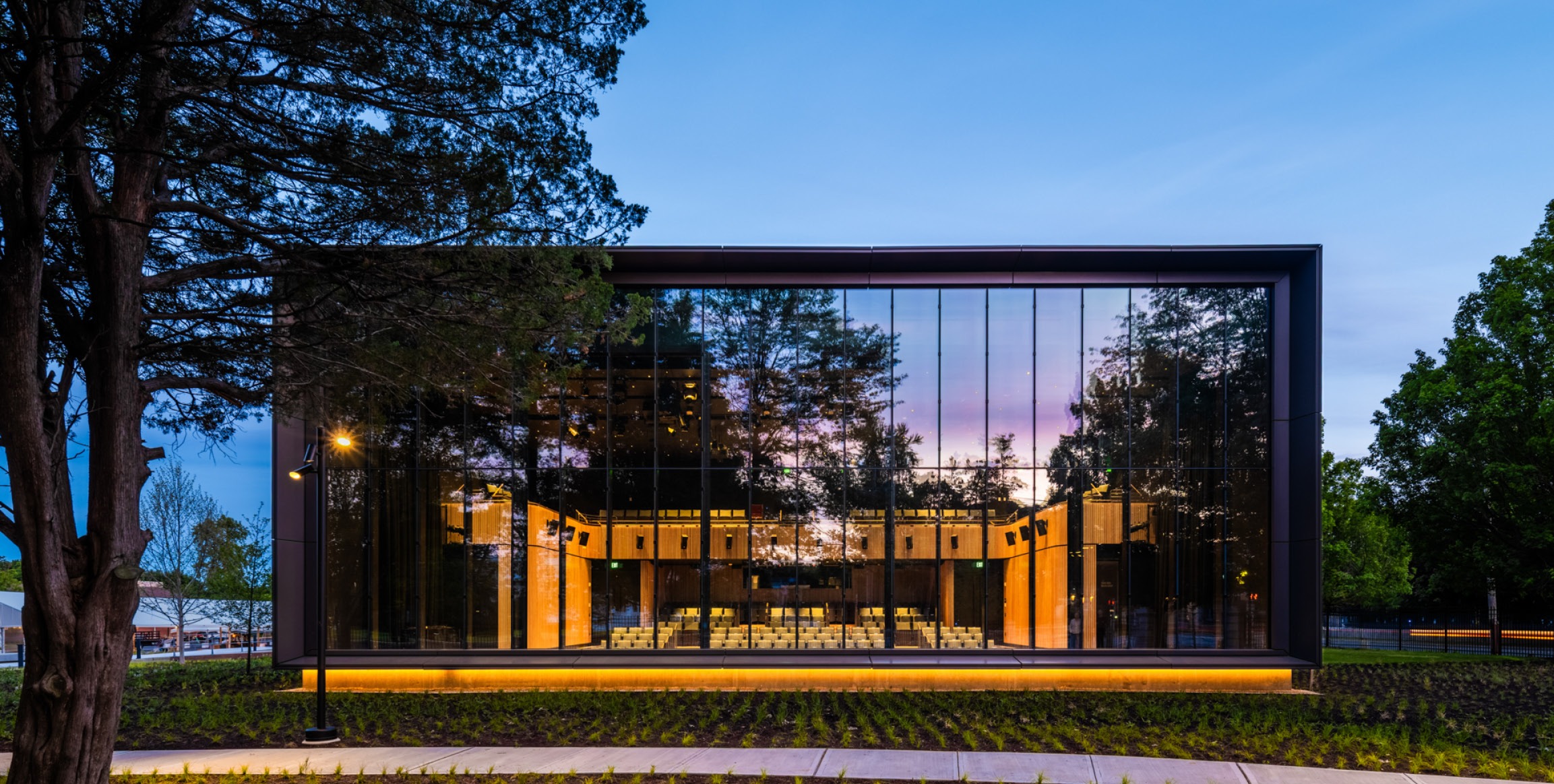
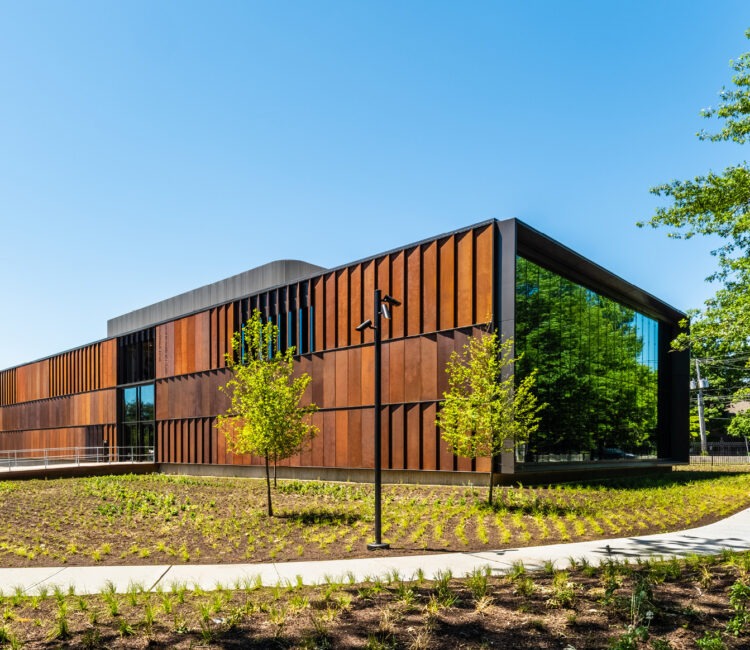
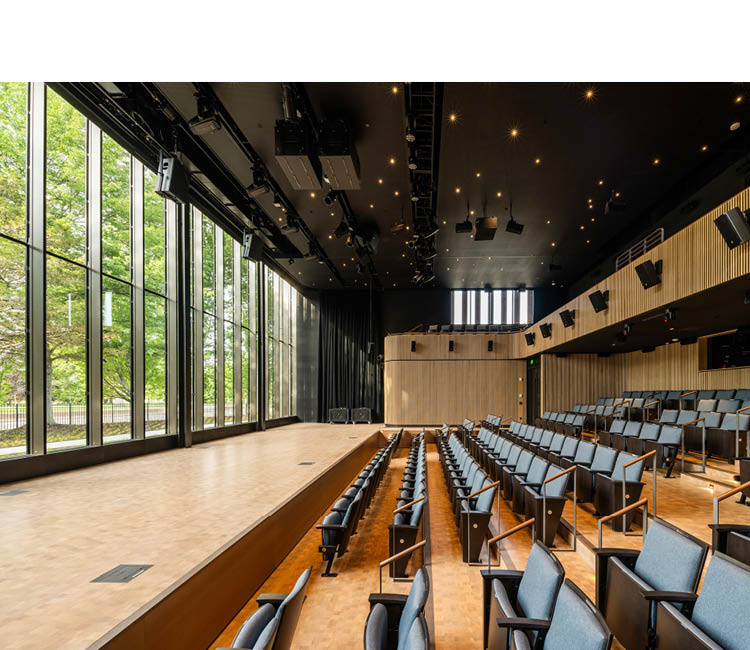
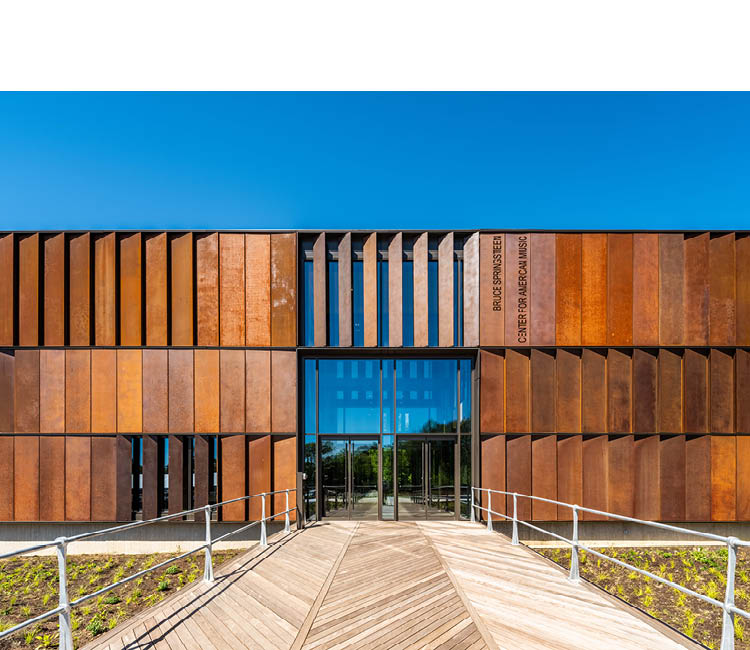
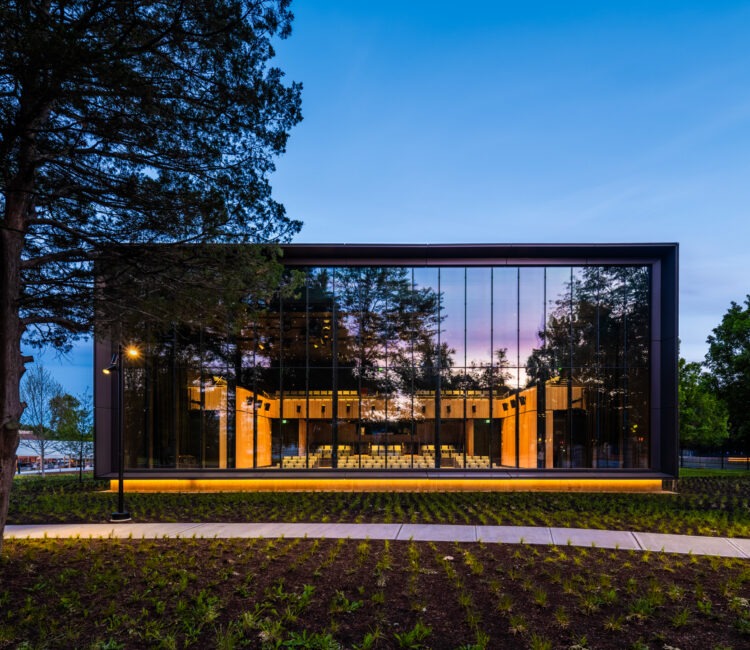
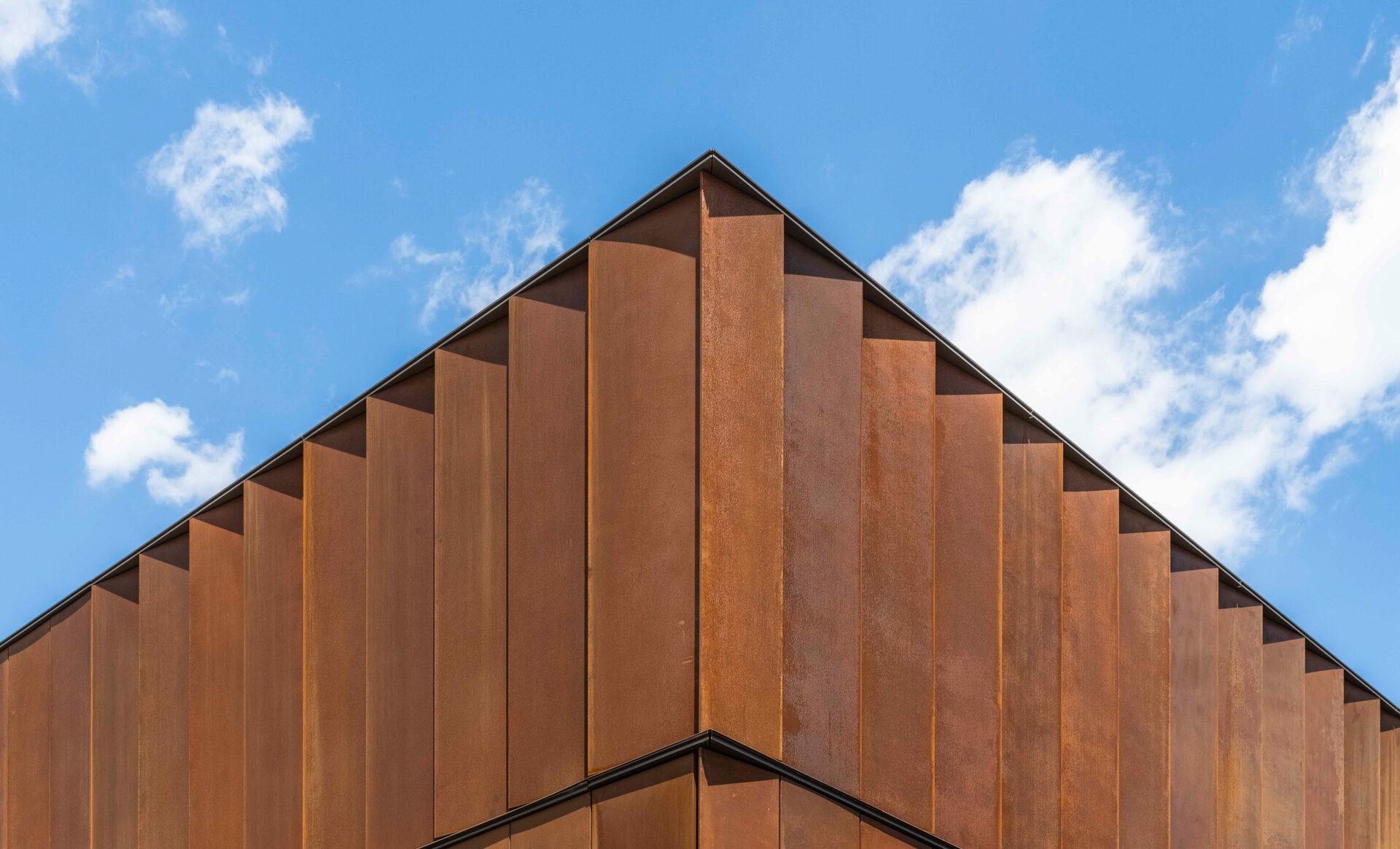
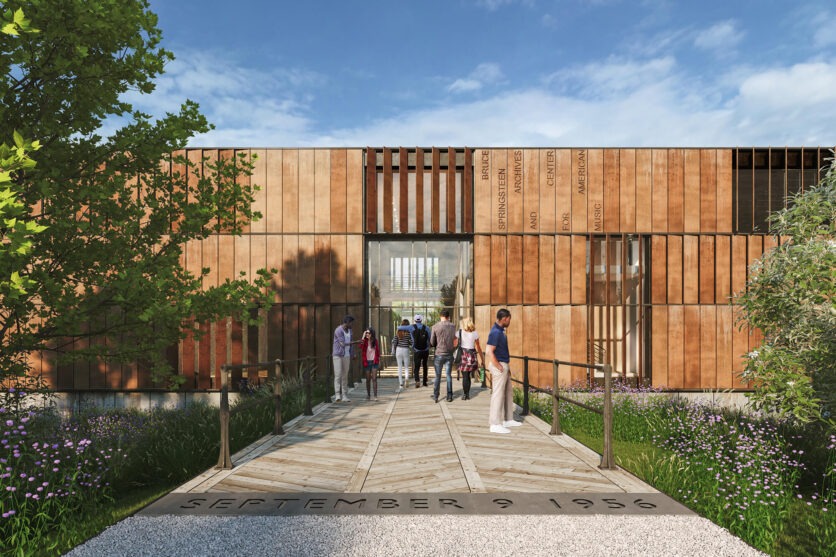
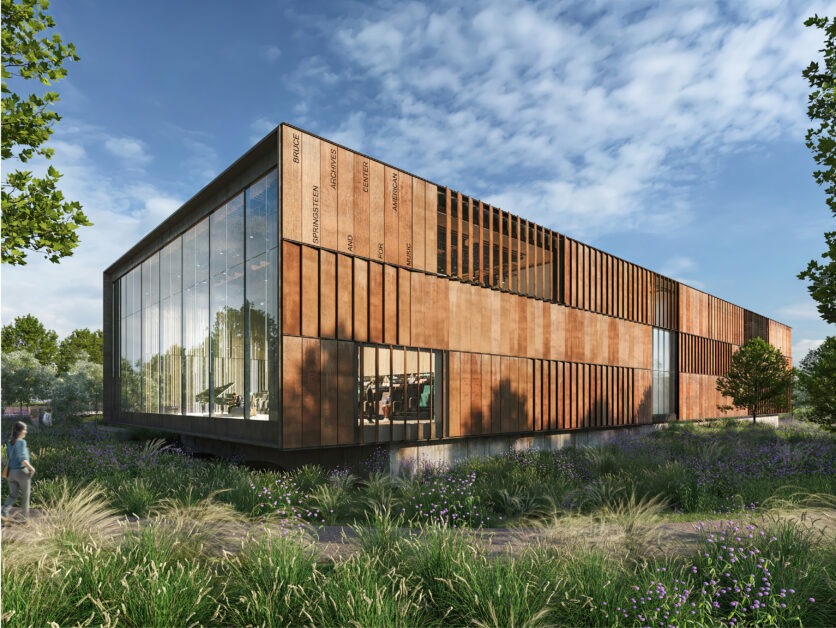
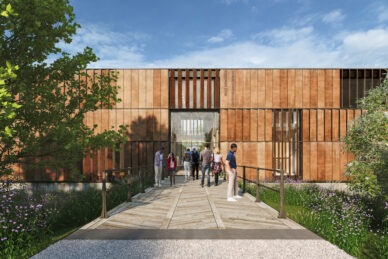
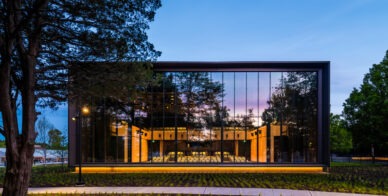
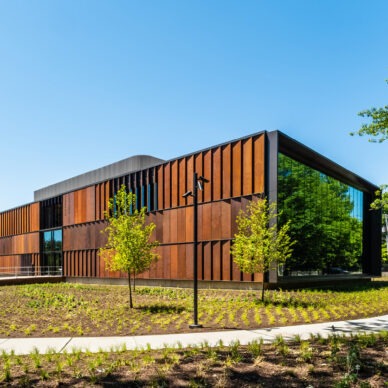
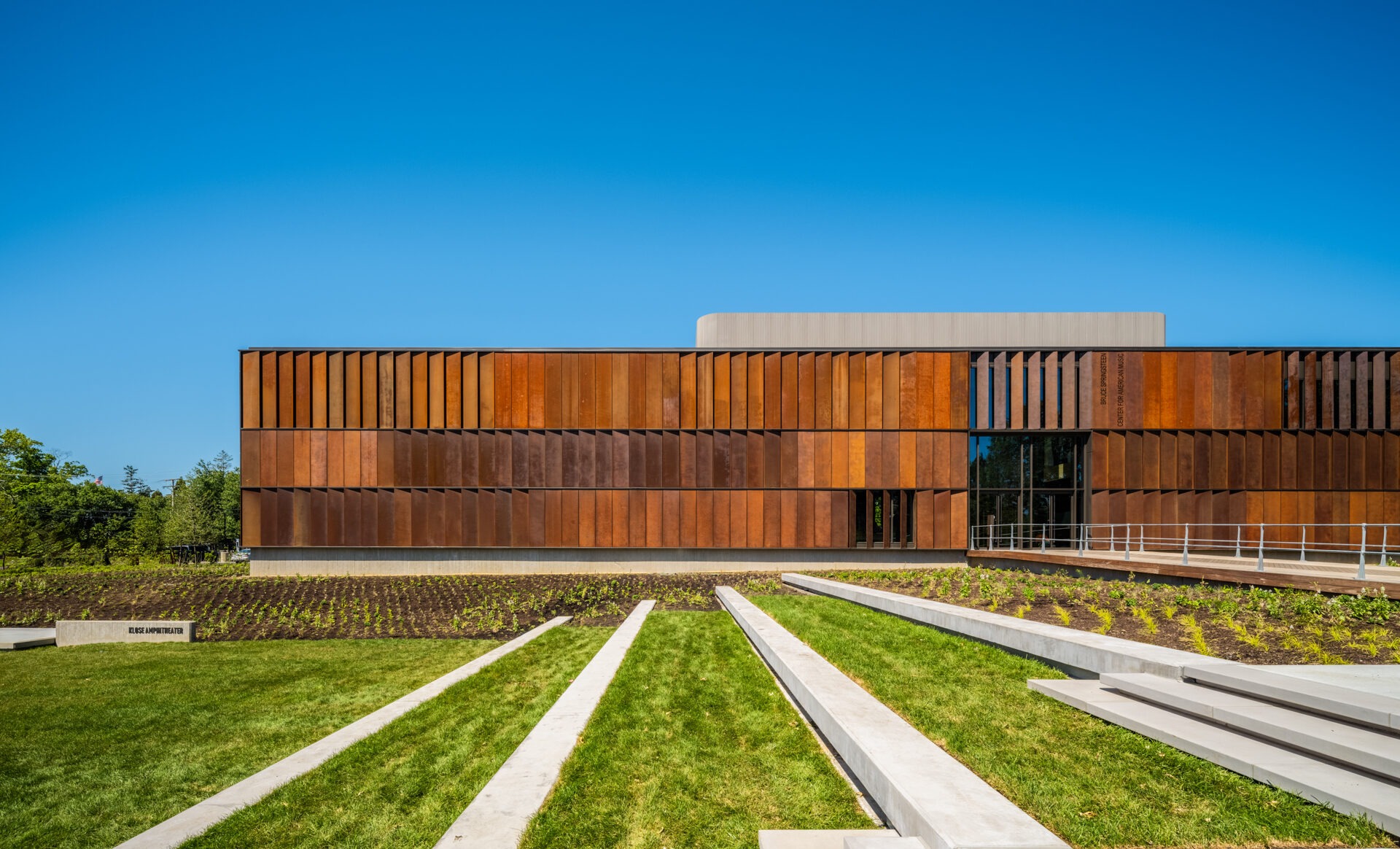
The Bruce Springsteen Center for American Music is dedicated to telling the story of music in this country and celebrating Bruce Springsteen’s contributions to that tradition. COOKFOX’s design seeks to express those interwoven themes and their composite parts—song, poetry, the myth of the American dream—as cultural placemaking. The building’s weathering steel façade references New Jersey’s industrial legacy and the protagonists of Springsteen’s music, and the mass timber structure creates authentic and welcoming interiors. Located at Monmouth University, the building balances the institution’s programmatic needs as an exhibition, educational, and archival space with a design concept that is rooted in the uniquely American drama of Springsteen’s music.
Download the fact sheet
Architecture exists in space, whereas music exists in time. How to create a physical space to honor a temporal art was a guiding question for the design. COOKFOX explored that tension through material and experiential strategies. From the evolving patina of the weathering steel and traces of growth visible in the mass timber structure, to the movement of sunlight across the facade, the building’s design references time.
Time is also invoked through sequencing and wayfinding. This begins at the point of arrival, where an elevated boardwalk promenade runs through an undulating grassy meadow, inviting a moment of communal reflection. Designed in collaboration with LaGuardia Design Group, the topography is filled with native plantings that improve local biodiversity and act as a bioswale for managing stormwater. Also included is a London Plane tree that symbolizes the tree that stood outside Springsteen’s childhood home.
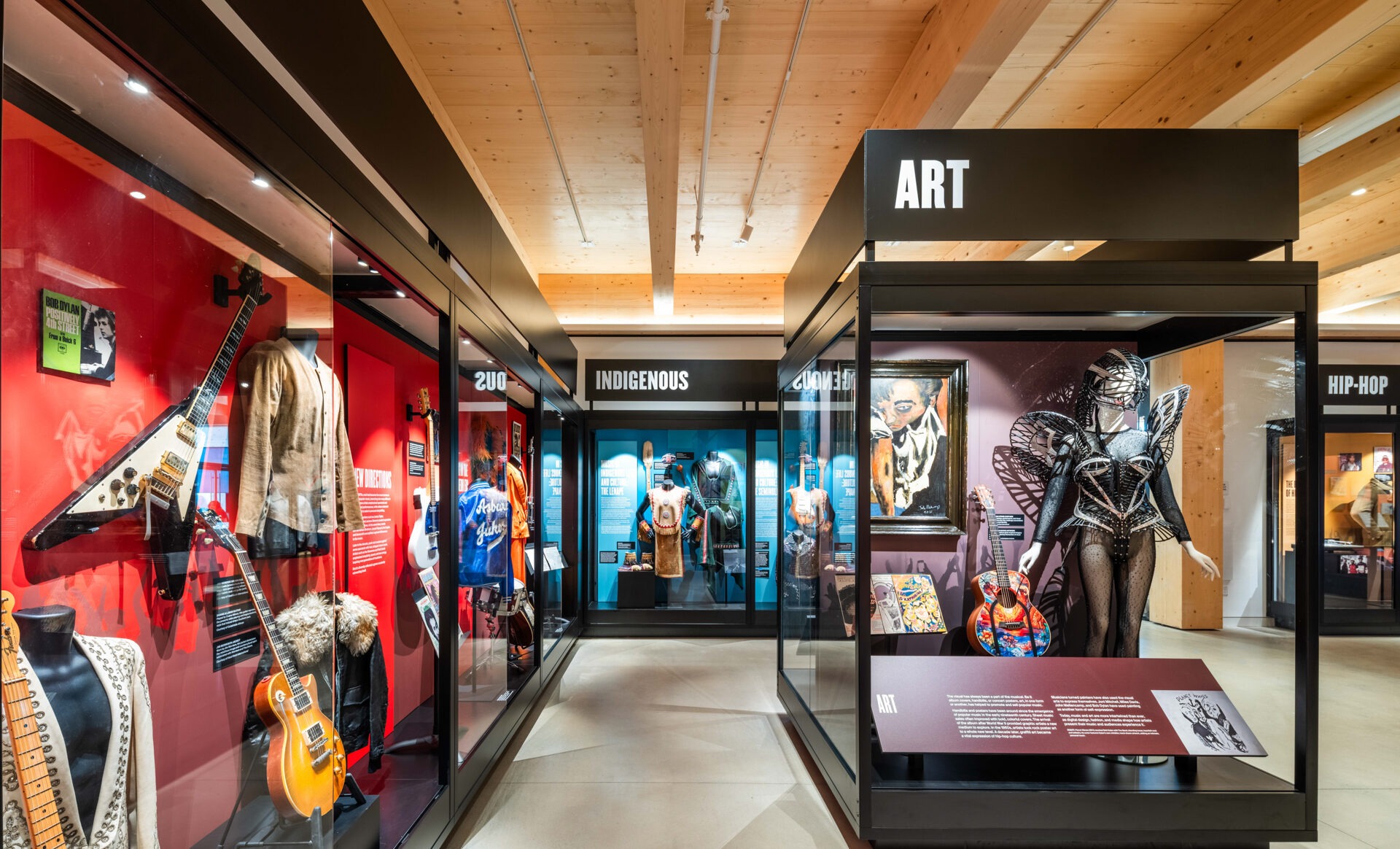
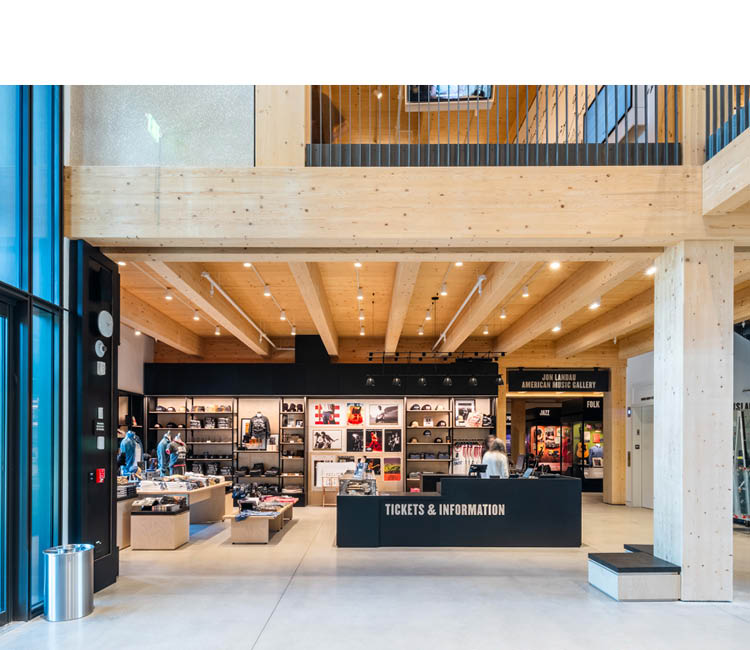
The progression continues inside the double-height, central hall, which bisects the open interior layout into a performance space to the north and exhibition galleries to the south. The building is constructed from sustainably harvested European glue-laminated and cross-laminated timber. Exposed beams, girders and columns of unstained wood are visible immediately; the timber’s inherent, tactile quality brings authenticity to the interior. The space reads as welcoming and grounding: just as a major chord produces innate, positive emotions, natural materials like timber inspire equally deeply-rooted feelings of warmth and familiarity.
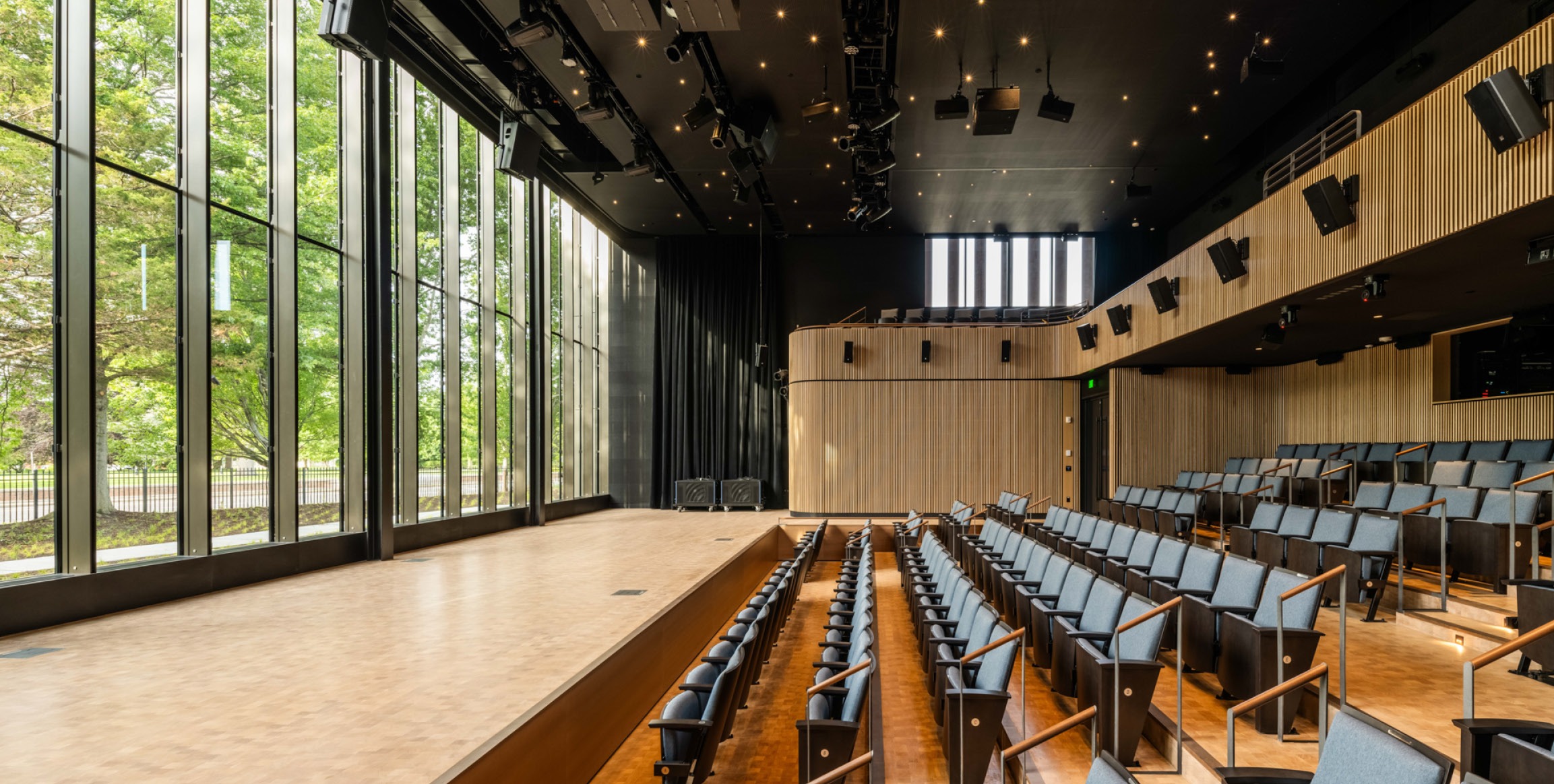
Clear, legible wayfinding directs visitors toward the performance space, where a short film about Bruce Springsteen’s life and career—directed by Thom Zimny specifically for the space—is the center’s opening act. The space has been engineered to perform at a high standard for musical performance, lectures, and video screenings. Thin vertical slats made of wood were designed to give human scale to the large space, to define and unify the curved surface of the interior walls, and to conceal acoustic panels that are tuned to both absorb and reflect sound. After the credits run, visitors continue to the ground floor exhibitions, which showcase different genres, histories, and heroes of American music.
On the second level, the Springsteen and E-Street band exhibitions function as a kind of finale. The archives, occupying a large portion of the second floor, are available for both amateur and serious musical scholars. Thanks to the center’s sequential programming, visitors arrive at this stage familiar with Springsteen’s work, his many influences, and the contemporary musicians who carry the torch of American music today.
Consistent with COOKFOX’s biophilic design approach, staff work areas are daylit, timber and other natural materials are used throughout, and views to nature are emphasized in the central hall, auditorium, and archive study areas, creating an environment that supports health, focus, and connection to place.
The building is LEED Gold Certified and meets museum-grade environmental standards, reflecting a strong commitment to sustainability, wellness, and performance. A Dedicated Outdoor Air System (DOAS) provides enhanced ventilation and precise humidity control, essential for both occupant comfort and archival preservation, while a hydronic radiant floor system is integrated with the mass timber structure to deliver efficient, even heating and cooling. The project also pursued the LEED Social Equity within the Supply Chain pilot credit by prioritizing products that meet all eight fundamental conventions of the International Labour Organization.
Departing visitors cross the boardwalk again. Like an opening melody played at the end of a symphonic movement, or a refrain in the chorus of a folk song, the boardwalk accumulates meanings through repeated communal engagement. At the Bruce Springsteen Center for American Music, architecture becomes an art of duration.
Consultant Team:
General Contractor: Torcon; Weathering steel: Dissimilar Metal Design; Mass Timber: Timberlab; Mechanical Engineer: Dagher Engineering; Structural Engineer & Facade Consultant: DeSimone Consulting Engineers; Civil Engineer: Langan; Geo-Technical Engineer: French & Parrello Associates; Landscape Architect: LaGuardia Design Group; Exhibition & Signage Designer: C&G; Lighting Consultant: ONELux; Code Consultant: Design2147; Acoustic Consultant: Longman Lindsey now Trinity Consultants; Security Consultant: Dagher Engineering; Theater Consultant: Harvey Marshall Berling Associates; Specification Consultant: Long Green Specs; Accessibility Consultant: KMA Architecture + Accessibility